This year I celebrated my 30th birthday. The Dirty Thirty, as it is sometimes called. As a treat to myself, I decided to go on a big three week trip to France. As a further treat to myself, I decided to go alone.
I got to do some really amazing book-related things while I was there, so I just wanted to take a few minutes to debrief AND talk about some of the books I read while I was there. A few of them were France-related, and some of them were just for fun while I was stuck inside during a storm in Paradise. (We’ll get there…)
So, if I really tried (and not even tried that hard…) I could relate everything I did in France back to something book-ish, but for the sake of sanity, I’m going to stick with things that I can fairly explicitly say are book-ish.
One of the first places I went, on my…second full day in Paris, was the Père Lachaise Cemetery. I’ve always loved cemeteries. Part of it is that I’m super morbid. But I think the bigger part of it is the sense of wonderment and overwhelm that I feel standing in a place literally full of history, thinking about the lives of the bodies buried there, thinking about what their world looked like, thinking about the people who surrounded them and the things that they cared about. And realizing that most likely, all of those things are gone now. And so will we all be. It’s honestly kind of comforting to me.
Père Lachaise was a straight shot north from my Airbnb, and teeming (too much, adjective-wise, for a cemetery?) with a wealth of people whom society—and I guess me, since I decided to go there—have deemed important. Among those important people are some pretty significant literary figures. I’ve included photos below of the gravestones of Moliere, Marcel Proust, Balzac, Oscar Wilde (!) and Abelard and Heloise. Abelard and Heloise are a bit further back, more obscure figures, but I learned about them during one of my medieval history courses in university. One of history’s most passionate, devastating, beautiful love affairs. Look it up. (Gertrude Stein is also buried at Père Lachaise, but for the life of me – haha – I could not find her, despite making two large circles around the EXTREMELY sizable cemetery.)
Later that same day, I walked from my Airbnb the 15 minutes over to the Victor Hugo house. Once I found out how close it was to me, I knew I had to go, even though it hadn’t really been part of my original plans. Hugo lived there from 1832 to 1848, and wrote many of his books there, including a large chunk of Les Misérables. He lived here before he lived in exile after Napoleon III’s coup d’état.
Above is a writing desk that was “commissioned” by Victor’s wife, Adele. She asked her husband, George Sand, Alexandre Dumas and Alfonse de Lamartine to contribute their inkwells, pens, and a signed letter to go with the desk as part of an auction to raise money for their adopted town of Guernsey. However, nobody else at auction could afford it, so Victor ended up buying it himself at auction.
A few days later, on my roundabout way back to my Airbnb from the Louvre, I walked across the Pont des Arts to la Bibliothèque Mazarine, the oldest public library in the country. You’re not really supposed to take pictures inside…oops. They have books that are centuries old just casually lined up along the walls. As one does.

From there, I actually just continued walking along the Seine until I reached Notre Dame. Mostly made famous by the Victor Hugo novel The Hunchback of Notre Dame. I’m obsessed with it now. Also, it was awesome to go and see it so soon before we opened our production of the show based on the novel at my place of work. (The 5th Avenue Theatre in Downtown Seattle. The Hunchback of Notre Dame plays through June 24, 2018.)
On my last day in Paris, I left my schedule entirely open, but I did know that I had to visit Shakespeare & Company, one of the most well-known bookstores in Paris. It is truly astonishing, most especially the story of how the bookstore was started and thinking about all of the giants of writing who have ever visited the place: Ginsburg, James Joyce, James Baldwin, Anais Nin, to name just a few. (Read more about the history of Shakespeare and Company here, if you’re interested.) And while the history is amazing, most of the books they have for sale are English language books, and we have English language bookstores at home, not to mention my luggage was COMPLETELY full at this point, so I didn’t actually buy any books. I did grab a tote bag because I guess I collect them (based purely on how many of them I have accumulated kind of accidentally). It might be the first time I’ve ever walked into a bookstore and not purchased any books. I felt impressed with my restraint.

After leaving Paris, I didn’t really do too many “literary” things, as it was meant to be the more relaxing, chill half of my vacation. But I DID finish quite a few books, since I hadn’t been able to get much reading done during the first half of my vacation because I was so busy. Here’s a little wrap up of the books I read, most of which have absolutely nothing to do with France.
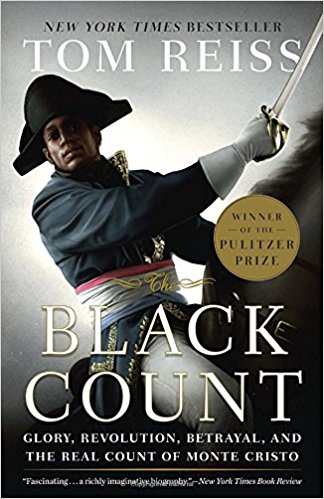
The Black Count by Tom Reiss
I started reading this at the beginning of my trip, having downloaded the ebook from my local library (shout out to KCLS!) in preparation. I finally finished it having arrived on Corsica. Little did I know that by the end of my trip, I would be able to see, from the coast of Corsica, the island of Montecristo in the Tuscan Archipelago.
I have always loved Alexandre Dumas (II, for the purposes of the book). The Three Musketeers I think is one of the first classics I ever read of my own volition because of the Disney movie version (with Chris O’Donnell and Oliver Platt and Keifer Sutherland and Tim Curry, which I was absolutely obsessed with as a kid) AND I feel like I’m hearing more from people that they had no idea that Alexandre Dumas was Black. So when I found out that not only did this biography about the author’s dad exist, but it also addressed how he rose through the ranks of the army even though he was Black in 19th century France, and how Dumas’ father was the inspiration for the character of Edmond Dantes and his , I was hooked. Reiss won a Pulitzer for this biography, and it’s no wonder. Fascinating and thorough, I honestly think I’m probably going to come back to this one in a couple of years and reexamine it when I’m not on vacation. Also, I am now inspired to read and re-read everything that Dumas ever wrote, knowing what I now know about his dad and Dumas’ (II) early life.

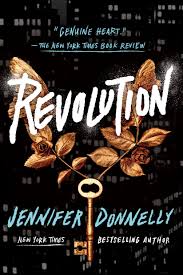
Revolution by Jennifer Donnelly
This was the only other France-related book that I read. It was pretty cute. Teenager Andi’s younger brother died in a tragic accident that she blames herself for. It tore her family apart, leaving her mentally fragile mother unable to cope and her already-absent father leaving the family and getting another chick pregnant. When her father has to go to France for a part-work, part-pleasure trip doing some very important DNA testing for a friend to determine whether remains found belong to a prince lost to history, Andi is dragged along for the ride. She’s not pumped about it, as she’s not super jazzed about her dad at the moment, but she goes along for the sake of researching a paper she’s writing. When she discovers a secret notebook in an old guitar case, she goes on a journey with Alexandrine, a young woman alive during the French Revolution who was a caretaker for the lost prince. Nothing to write home about re: writing structure, prose, etc. but it was definitely a fun adventure.
Magic Rises, Magic Breaks, Magic Shifts by Ilona Andrews
Ilona Andrews is the pen name for a husband-and-wife writing team. These are books 5, 6, and 7 in the Kate Daniels series, which I started reading as part of the now-defunct Vaginal Fantasy book club. Not much to say about them other than they’re about a badass heroine with sarcasm for days who will literally lay down her life for the people she cares about, including were-lion Curran, her beau. The books take place in a post-apocalyptic world that cycles through magic phases and tech phases, never knowing when it’ll be one or the other. Though there are some annoying tropes (how could there not be?), for the most part, this is a pretty solid series with one of my favourite leading ladies. I fell a bit behind in the past few years as Ilona Andrews continued churning out books, so it seemed like an apt opportunity to catch up as I was stormed in.
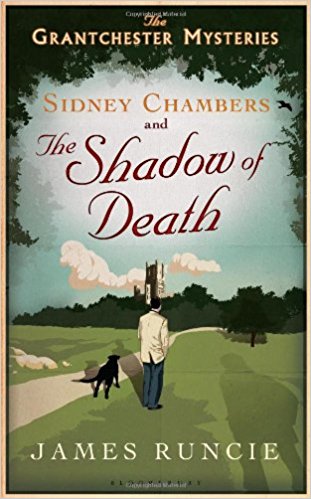
Sidney Chambers and the Shadow of Death by James Runcie
I started watching the TV series when I first got to France as a thing to do to wind down after long days, and lost many hours of sleep that I probably needed zooming through them. I’m a sucker for mysteries, I’m a sucker for period pieces, I’m a sucker for period mysteries, and I’m a sucker for an attractive gent who is conflicted about his place in the world. If you don’t know the series, Sidney Chambers is a vicar in a post-World War II Grantchester (near Cambridge) who accidentally falls into detective work. He also is in love with Amanda, one of his sister’s friends, though they have sort of mutually decided that them being together would never work because he’s a poor vicar and she comes from a well-to-do family. The books are semi-episodic already, containing about 5-7 self-contained mysteries in each. I usually am adamant about reading books before consuming the TV/movies attached to them, but it was actually interesting to me to have watched the series first and then think about why they might have decided not to include certain facets of the book in the series. Each season of the show covers the content of one of the books (though things get a little off the rails in about book/series 3.) The books are quick paced and light, compared to some of the other shit I sometimes read.

Want by Cindy Pon
Last but not least. Somebody book-ish I follow on Twitter recommended this book when it was on sale on Amazon. I think $1.99 for an ebook? Anyway, I knew literally nothing about it, but it’s quite hard to go wrong with a price of $1.99 and a recommendation from somebody I have chosen to follow on Twitter. Set in some distant future in Taipei, the wealthy have access to suits that keep their air healthy and the poor are left to breathe the super-polluted, disease-ridden air. Jason Zhou and his friends want to take down the company that builds the suits, hoping that if they do, maybe the government will actually invest in making things better for all citizens. Jason kidnaps a random girl and ransoms her. With the ransom money, he and his friends build an elaborate cover life for him, and he goes undercover with the wealthy folks, getting close to the daughter of the dude who owns the suit company. Shenanigans, intrigue, destruction, death ensue. I really quite enjoyed this one. It was pretty fast paced, I appreciated that it was sent in an Asian country but didn’t fetishize the culture in a way that some books set in Asian cultures do, and though I did get a bit shouty sometimes, the romance was just fine and full of actual conflict (as opposed to fabricated for the sake of drama).

 Nora is a paid companion to her distant cousin Lady Roundtree, who has broken her leg. The only reason she took the position was to help support her younger brother and elderly grandparents in the country, where she usually lives. She’s not used to the way that things are done in society. She’s not great at reading and writing (she has dyslexia, though it’s never stated that way) and so she draws little caricatures of society gatherings for her family back home. Little does she know, her brother started selling them to a publication, albeit anonymously, and the society she has depicted in these caricatures is not thrilled to see their laundry aired. Heath, a member of that society, is also known as something of a fixer. He is hired to track down the identity of the caricaturist. But he didn’t expect to develop feelings for this new lower class girl and he definitely didn’t expect her to be the person behind the pen.
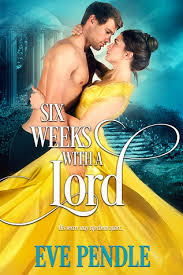 Oh boy was this one ever not for me.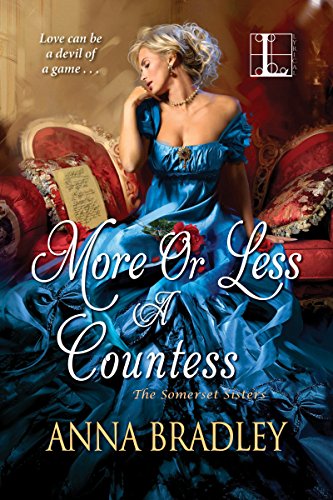


 Jo In Real Life